Enersense International Plc | Press Release | June 22, 2026 at 09:10:00 EEST
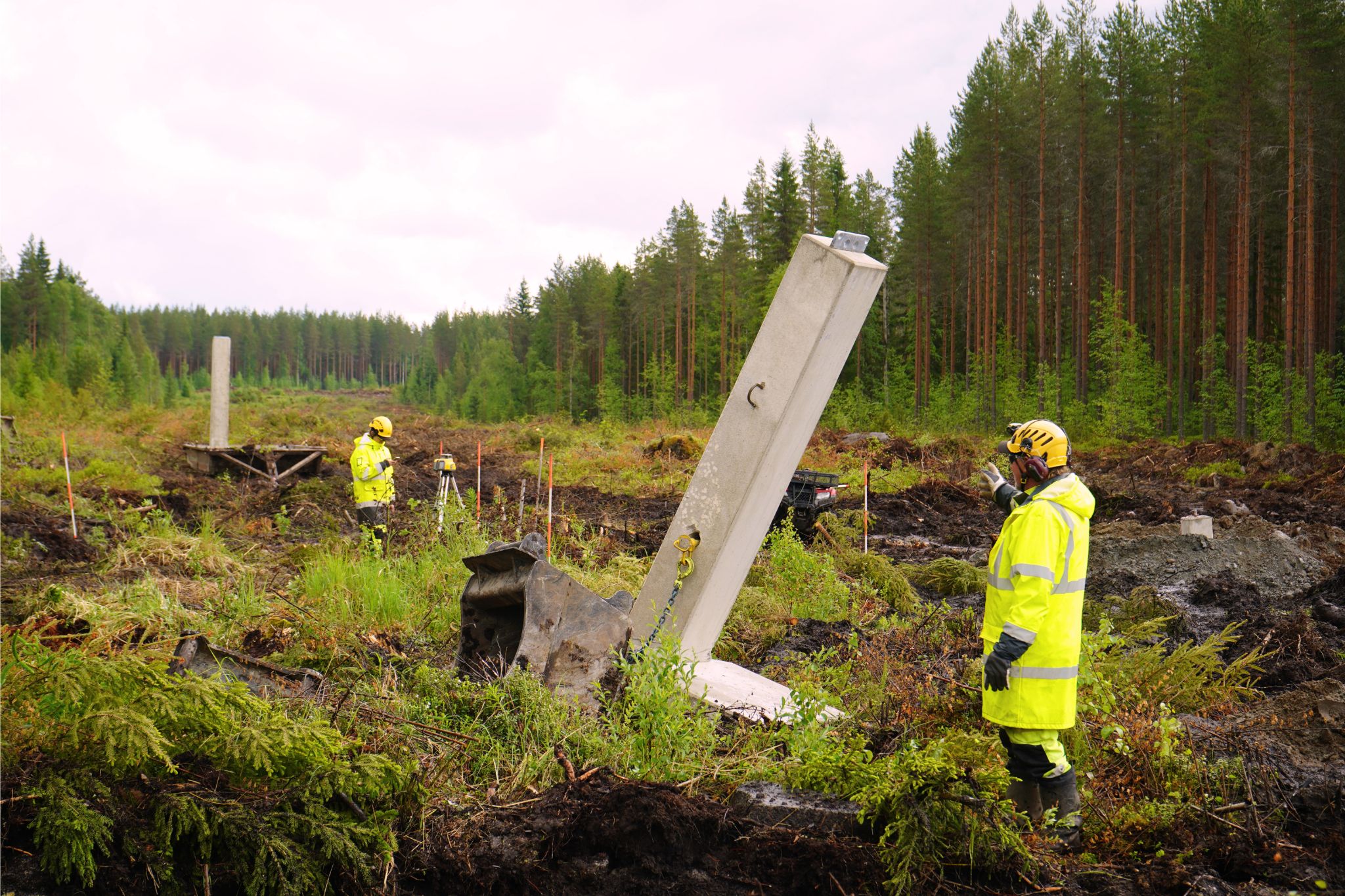
Enersense is building more than 100 kilometres of main grid transmission lines in Central Finland and Ostrobothnia using lower-emission concrete. More than 4,000 tonnes of concrete elements will be used in the project, making the emission reduction significant.
The transmission line being constructed between Alajärvi in South Ostrobothnia and Petäjävesi in Central Finland utilises lower-emission concrete, whose carbon dioxide emissions are approximately 15 per cent lower than those of conventional concrete.
Lower-emission concrete elements are used in the foundations of transmission line towers, which are buried several metres underground. A single foundation unit can weigh up to three tonnes.
“Within a single project, tens of tonnes of CO₂ emissions can be saved through concrete choices alone. Enersense aims to bring options to every project that reduce emissions and support customers’ sustainability targets,” says Santeri Hirvonen, Director of High Voltage Lines at Enersense.
Material choices directly influence construction emissions
A significant share of construction industry emissions comes from steel and concrete. Therefore, material choices have a direct impact on the climate footprint of projects.
The precast elements have been supplied to Enersense by Lujabetoni, a Finnish concrete industry company.
“The use of lower-emission materials is still an emerging area, but we have noticed that interest in them is growing rapidly in infrastructure construction. The first large-scale projects are important because they build experience and accelerate wider adoption and demand. It is great to see Enersense taking a leading role,” says Tuomo Eilola, Business Unit Director at Lujabetoni.
The Alajärvi–Petäjävesi transmission line project is the first large-scale transmission line project to be built entirely using lower-emission concrete elements. Enersense piloted lower-emission concrete in transmission line construction reportedly as the first company in Finland last year, when it built approximately one third of a 117-kilometre transmission line using lower-emission precast concrete elements in Northern Ostrobothnia.
“I hope that lower-emission materials will become the new normal in construction projects in the future. This development requires cooperation across the entire value chain – the client, the contractor and the material supplier,” Hirvonen adds.
The end customer of the project is Fingrid, Finland’s transmission system operator.